
“Don’t invite America into this fight” — Gumi warns Nigeria over growing insecurity crisis(Video)

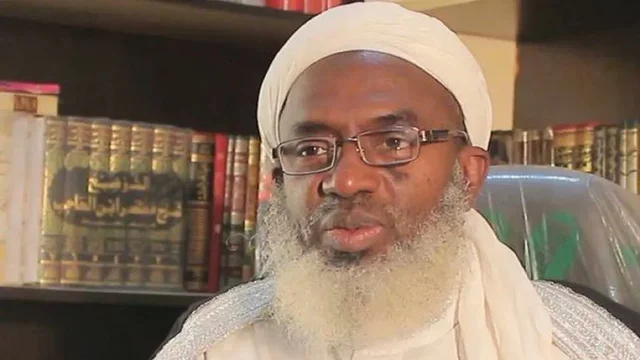
Prominent Islamic cleric Sheikh Ahmad Gumi has stirred fresh debate across Nigeria after warning that involving the United States in the country’s worsening insecurity crisis could open the door for foreign terrorist organizations to establish a stronger presence in the region.
His remarks came amid renewed discussions about international military cooperation and calls from some political figures for foreign assistance in tackling banditry, insurgency, and kidnappings ravaging parts of the country..WATCH VIDEO HERE
Speaking during a public engagement in Kaduna, Gumi argued that Nigeria must be careful not to internationalize its internal security battles in ways that could complicate the nation’s fragile stability...READ FULL STORY; FROM THE SOURCE.
According to him, once powerful foreign nations become deeply involved in local conflicts, the dynamics often change beyond the control of the affected country. He warned that extremist groups from outside Africa could exploit the situation and use Nigeria as a new operational base.
The cleric said Nigeria’s security challenges, though severe, remain largely local and regional in nature. He stressed that introducing major Western powers into the equation could unintentionally transform the conflict into a broader ideological battle capable of attracting dangerous international actors seeking relevance and territory.
Gumi insisted that the country should prioritize homegrown solutions, dialogue, intelligence gathering, regional cooperation, and economic reforms rather than depending heavily on foreign military intervention.
His comments quickly generated reactions from political observers, security experts, religious groups, and ordinary Nigerians who remain deeply frustrated by years of violence and instability. While some agreed with his cautionary tone, others accused him of underestimating the scale of Nigeria’s security emergency.
Across social media, debates intensified as citizens questioned whether the country still possesses the capacity to handle the crisis independently.
For years, Nigeria has battled multiple security threats simultaneously. In the northeast, insurgent groups continue launching attacks despite military offensives. In the northwest, armed bandits have terrorized villages, abducted schoolchildren, and attacked highways.
Separatist tensions remain active in parts of the southeast, while communal clashes and violent criminal networks continue to threaten lives in several regions. The growing complexity of these challenges has fueled calls for stronger international partnerships.
However, Gumi maintained that foreign involvement often comes with long-term consequences many countries fail to anticipate at the beginning. He pointed to examples from parts of the Middle East and Africa where international military interventions escalated local conflicts or created environments for extremist organizations to flourish.
According to him, Nigeria should study those lessons carefully before embracing foreign security operations too quickly.
The cleric also emphasized the importance of rebuilding trust between the government and local communities. He argued that insecurity thrives when poverty, unemployment, distrust, and marginalization are allowed to deepen unchecked. In his view, military action alone cannot permanently solve the crisis unless underlying social and economic grievances are addressed.
He urged leaders to invest more aggressively in education, agriculture, youth empowerment, and reconciliation efforts.
His statement comes at a sensitive moment for the Nigerian government as public pressure mounts over persistent attacks and mass kidnappings. Many citizens have expressed anger over what they describe as slow progress in restoring safety across affected communities.
Some have openly supported the idea of stronger partnerships with countries like the United States, believing Nigeria requires advanced intelligence systems, surveillance technology, and tactical support to defeat heavily armed criminal groups.
Others, however, share Gumi’s fears that excessive dependence on foreign military assistance could weaken national sovereignty and create unintended geopolitical complications. Critics of foreign intervention often argue that global powers rarely engage in conflicts without pursuing strategic interests of their own. They warn that once external forces gain influence in a country’s security operations, it may become difficult to fully control the direction of events afterward.
Security analysts remain divided over the issue. Some experts believe Nigeria already collaborates with foreign nations in areas such as intelligence sharing, counterterrorism training, and equipment procurement, meaning deeper cooperation may simply represent an expansion of existing relationships rather than a dramatic shift. Others argue that direct involvement by foreign powers could alter the narrative around Nigeria’s security crisis and potentially attract international extremist propaganda.
Meanwhile, political leaders have continued emphasizing the government’s determination to restore peace nationwide. Authorities insist military operations against insurgents and criminal gangs are ongoing, while new security measures are being introduced across vulnerable regions. Officials have repeatedly called for patience from Nigerians, arguing that the scale of the crisis requires sustained long-term strategies rather than quick fixes.
Still, fear remains widespread in many communities affected by violence. Farmers have abandoned farmlands in some areas due to attacks, contributing to concerns about food insecurity and rising prices. Parents worry about the safety of their children following repeated school abductions, while travelers increasingly fear attacks on major highways. Businesses in conflict-prone regions also continue suffering economic losses as instability disrupts commercial activities.
Gumi’s comments have once again placed him at the center of national attention. Over the years, the cleric has played controversial roles in conversations surrounding insecurity, particularly regarding dialogue with armed groups operating in northern Nigeria. Supporters view him as someone attempting to prevent further bloodshed through negotiation and mediation, while critics accuse him of being too sympathetic toward criminal elements.
Despite the backlash that often follows his statements, Gumi has consistently defended his position that military force alone cannot end the violence. He believes sustainable peace can only emerge through a combination of security operations, negotiation, justice, and economic inclusion. His latest warning about U.S. involvement appears to align with that broader philosophy.
As discussions continue, many Nigerians remain focused on one urgent question: how can the country finally overcome the insecurity that has disrupted countless lives for years? Whether through local reforms, regional alliances, international partnerships, or a combination of all three, citizens are desperate for practical solutions capable of delivering real safety and stability.
For now, Gumi’s remarks have added another layer to an already emotional national conversation. His warning about the potential arrival of foreign terrorist groups if Nigeria becomes too closely tied to foreign military interests has sparked concern, skepticism, and heated debate.
In a country already struggling with multiple security threats, opinions remain sharply divided over the best path forward.