Breaking: LPG Prices Surge to ₦1,531 for 1kg, Increasing Pressure on Nigerian Households

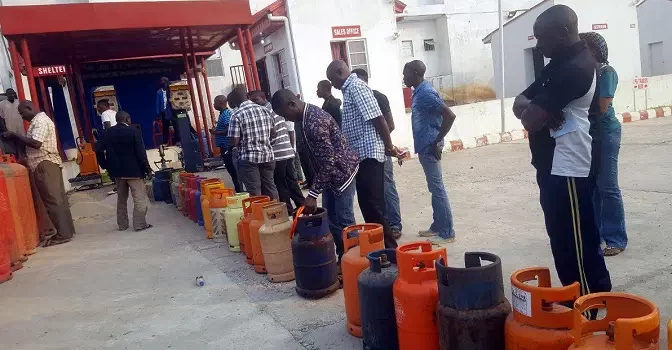
Cooking gas prices in Nigeria surge as 5kg reaches ₦7,655 and 12.5kg hits ₦19,652 in March 2026, driven by forex pressures and global energy trends.
- National Bureau of Statistics reports 5kg cooking gas rose 12.6% to ₦7,655 in March 2026.
- 12.5kg cylinder refill increased 15.62% month-on-month to ₦19,652.
- Kaduna, Lagos, and Taraba recorded the highest prices, while Bauchi, Osun, and Ondo had the lowest.
- Rising LPG costs are linked to forex instability, global oil price increases, and transport expenses.
Cooking gas prices in Nigeria have jumped again, and it’s putting more pressure on households already dealing with rising living costs.
New data from the National Bureau of Statistics (NBS) shows that the average price for a 5kg cylinder of cooking gas rose to ₦7,655.73 in March 2026, up from ₦6,799.18 recorded in February...READ FULL STORY; FROM THE SOURCE.
Sharp monthly increase in LPG price
According to the NBS Cooking Gas Price Watch released in Abuja, this represents a 12.60% increase month-on-month. On a yearly basis, the price is also up by 4.55% compared to ₦7,322.49 in March 2025.
For many Nigerians, that jump is already being felt in everyday cooking expenses.
State-by-state breakdown shows wide price gap
NBS data highlights a significant price divide, with Kaduna recording the highest average prices while Ondo remains the cheapest
The report highlights how prices vary significantly across states:
- Kaduna recorded the highest average price at ₦9,212.21
- Lagos followed at ₦8,909.73
- Taraba came next at ₦8,802.78
On the lower end:
- Bauchi had the cheapest at ₦6,295.40
- Osun stood at ₦6,457.35
- Ondo recorded ₦4,598.10
By region, the North-West had the highest average price at ₦8,137.81, while the South-South recorded the lowest at ₦7,300.95.
12.5kg gas price rises even faster
The 12.5kg cylinder refill price saw a sharp 15.62% monthly increase, placing a heavy financial burden on Nigerian families
The increase wasn’t limited to smaller cylinders. The average price to refill a 12.5kg cylinder climbed to ₦19,652.83 in March, up from ₦16,997.94 in February, a sharp 15.62% rise.
Year-on-year, that’s also a 6.48% increase compared to March 2025.
Nasarawa topped the chart for the highest 12.5kg refill price at ₦23,418.12, followed by Kaduna and Akwa Ibom. Meanwhile, Bauchi, Osun, and Ondo recorded the lowest prices.
Regionally, the North-West again led with the highest average, while the South-East had the lowest.
Why cooking gas prices are rising
Experts say several factors are behind the steady increase, from exchange rate issues to global market pressures.
Speaking, economist Opeyemi Alabi linked the surge to global energy trends and currency challenges.
“LPG is a globally traded commodity often priced in US Dollars. Significant fluctuations or a devaluation of the Naira can immediately increase the landing cost of imported gas, which still makes up a large part of Nigeria’s supply.
“When global Brent crude oil prices or international LPG benchmarks increase, Nigeria’s domestic prices typically also rise, including for gas produced locally by Nigeria LNG (NLNG).
“These factors have contributed to a steady upward trend in national energy expenses, with month-on-month increases reaching 12.60 per cent and 15.62 per cent for 5kg and 12.5kg cooking gas, respectively as seen from the report.”
He also pointed to geopolitical tensions in the Middle East, particularly the US-Iran war, as a factor pushing up global oil and gas prices.
Nigerians call for government action
With prices continuing to climb, many Nigerians are calling on the government to step in and ease the burden, especially for low- and middle-income households that rely heavily on cooking gas.
For now, though, the trend suggests gas prices may remain high unless there’s stability in foreign exchange and global energy markets.